If you are searching for a Boston-area suburb that feels established, connected, and easy to settle into, Winchester is likely on your radar. You may be wondering whether it offers the right mix of daily convenience, green space, housing character, and commuter access for your next move. The good news is that Winchester has a clear identity, and understanding how the town functions day to day can help you decide if it fits your lifestyle and goals. Let’s dive in.
Winchester at a glance
Winchester is a mature suburban town near Boston with a compact town center, primarily single-family neighborhoods, and a substantial supply of preserved historic homes. Town planning materials describe it as an attractive suburban community with access to regional employment centers through highways and commuter rail, along with conservation areas, parks, playfields, and water features.
As of the Census Bureau’s July 1, 2025 estimate, Winchester had 23,710 residents. The town also shows a high rate of owner occupancy at 81.7%, with a median value of owner-occupied homes of $1,215,200. Those numbers help paint a picture of a well-established, premium housing market where many residents put down long-term roots.
Daily life in Winchester Center
Winchester Center is the heart of everyday life in town. It is compact, which can make day-to-day routines feel convenient when you want to run errands, stop by the library, or head to the commuter rail.
At the same time, the town’s planning documents note long-running pressure points around parking and pedestrian circulation. In practical terms, that means errands, school drop-offs, and commuter traffic often concentrate around a relatively small group of streets and parking areas.
For many residents, that central activity is part of what gives Winchester its sense of place. Instead of feeling spread out, the town center functions as a visible hub where civic, cultural, and day-to-day routines overlap.
Community anchors shape the town
A big part of living in Winchester is having a strong set of community institutions close to home. The town highlights the Griffin Museum of Photography, Winchester Community Music School, Winchester Public Library, Wright-Locke Farm, and the Jenks Center as important local anchors.
These places add rhythm to the week and year. Winchester Community Music School says it serves about 900 students each week, ranging in age from 18 months to 102 years, and hosts concerts, workshops, and drop-in events. That kind of ongoing programming adds to the town’s active community feel.
The Town Common also plays a central role. The Winchester Farmers Market runs there from the second Saturday in June through the last Saturday in October, from 9:00 a.m. to 1:00 p.m., and the town calendar lists summer concerts on the Common as well.
Outdoor spaces and weekend routines
If you value access to nature, Winchester offers a meaningful amount of protected open space. Town materials point to the Middlesex Fells Reservation on the east side of town, the 29-acre Town Forest, and the Town Common as part of the local open-space network.
That gives residents several ways to spend time outdoors without having to drive far. Depending on your routine, you may find yourself heading out for a walk in the Fells, spending time on the Common, or visiting one of the town’s other public outdoor areas.
Wright-Locke Farm stands out as one of Winchester’s most distinctive amenities. The town describes it as the last remaining active farm in Winchester and the remnant of the Locke Farm, which adds a rare agricultural element to a suburban community this close to Boston.
Housing in Winchester
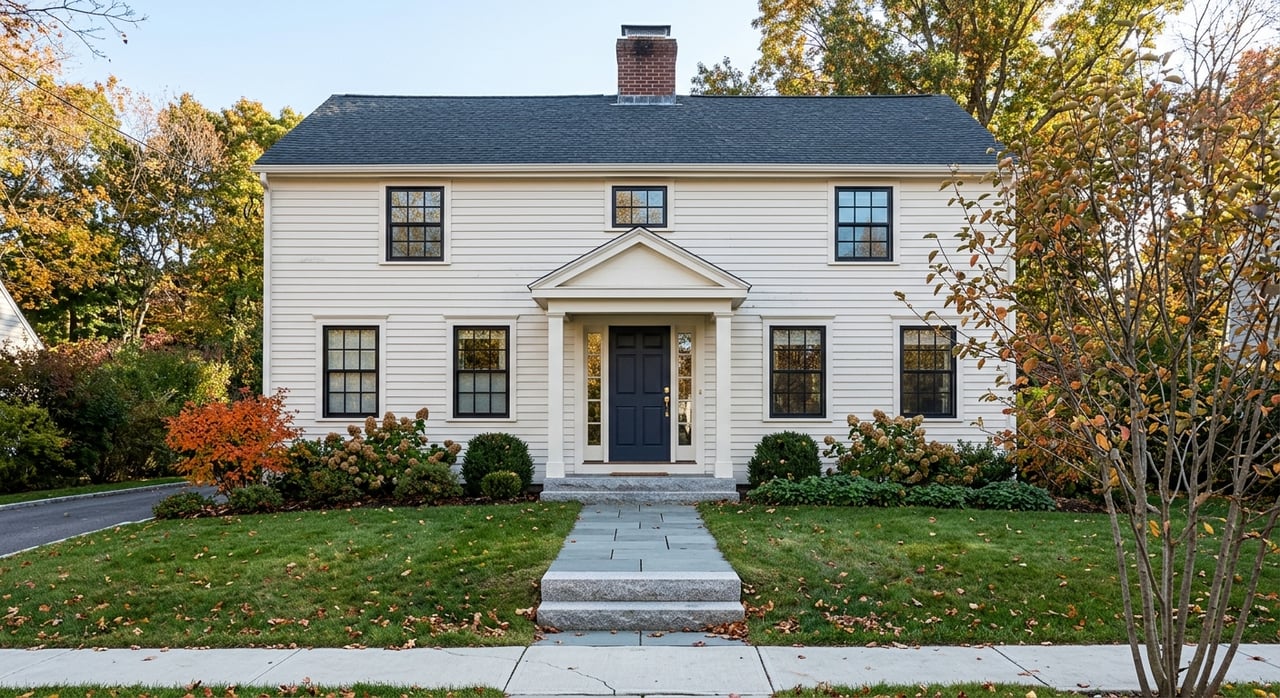
Winchester’s housing stock is one of its defining features. Town planning materials describe a variety of coherent, primarily single-family neighborhoods and a large stock of well-preserved historic homes.
That established character is part of the town’s appeal, especially if you are looking for a neighborhood with architectural continuity rather than large areas of brand-new development. Planning documents also note that newer change has often come through tear-downs and rebuilds of single- or two-family houses, particularly where land values are highest.
The current housing profile reinforces that point. Winchester has high owner occupancy and high home values, and the town’s master planning materials note ongoing pressure to balance growth with neighborhood character.
Here is a simple snapshot of what that can mean for buyers:
| Winchester housing trait | What it may mean for you |
|---|---|
| Primarily single-family neighborhoods | More traditional suburban housing patterns |
| Preserved historic homes | Strong architectural character and established streetscapes |
| High owner-occupancy rate | A market shaped by long-term ownership |
| High home values | A premium price point compared with many surrounding options |
| Tear-down and rebuild activity in some areas | Ongoing evolution within an otherwise mature housing stock |
Schools and family routines
Families are a visible part of Winchester’s identity. Census data shows that 27.6% of residents are under 18, which supports the town’s family-oriented profile.
Winchester Public Schools lists seven schools serving 4,341 students. That includes five elementary schools, one middle school, one high school, and a preschool.
For buyers who want a town with established school infrastructure, Winchester often stands out for that reason. If schools are part of your home search, the structure and scale of the district are likely to be part of your evaluation alongside housing, commute, and neighborhood feel.
Commuting from Winchester
Commuting is built into daily life for many Winchester residents. The Census Bureau reports a mean travel time to work of 31.4 minutes, and the town identifies itself as a commuter rail community.
Town materials place Winchester Center station on the Lowell Line in downtown Winchester, about 7.8 miles from North Station. A January 2025 town advisory said the renovated south half of the station was open for inbound and outbound commuter rail service.
Transportation planning materials also describe two commuter rail stations in town, Winchester Center and Wedgemere, along with bus and bike connections. If you work in Boston or another regional job center, that network can be a major part of Winchester’s appeal.
What living in Winchester feels like
Living in Winchester tends to mean choosing an established suburb over a fast-changing one. The town blends a walkable central core, commuter access, open space, and a housing market defined by long-term ownership and premium pricing.
That combination can work well if you want a community where many daily needs and activities connect back to a recognizable town center. It can also appeal if you value historic housing character, local institutions, and access to outdoor spaces close to home.
At the same time, Winchester is not a lower-cost entry point into the Greater Boston market. With a median owner-occupied home value above $1.2 million, it is generally better suited to buyers prepared for a premium suburban market.
Who Winchester may suit best
Based on the town’s housing pattern, amenities, and transportation setup, Winchester may be a strong fit if you are looking for:
- An established suburban setting near Boston
- A compact, active town center
- Primarily single-family neighborhoods
- A substantial stock of historic homes
- Access to commuter rail service
- Nearby open space and local cultural amenities
- A community with strong school infrastructure
It may be less ideal if your top priority is finding a lower-cost market or a neighborhood dominated by newer construction.
Why buyers pay attention to Winchester
Winchester offers something many buyers want but cannot always find in one place: a town center that feels active, housing that feels rooted, and a location that still connects well to the wider region. That does not make it the right fit for everyone, but it does explain why the town continues to draw attention from buyers looking for a classic suburban environment close to Boston.
If you are comparing Winchester with nearby communities, it helps to look beyond broad labels and focus on how you actually want to live. Your ideal town is not just about price or commute. It is about whether your daily routine, housing goals, and sense of community line up with what the location truly offers.
If you are considering a move in Winchester or another close-in suburb, the Marjie and Phil Team can help you evaluate the market with local insight, practical guidance, and a smart strategy tailored to your goals.
FAQs
What is daily life like in Winchester, MA?
- Daily life in Winchester often centers on the compact Winchester Center area, where errands, commuting, and community activities come together around the town’s main civic and cultural spaces.
What types of homes are common in Winchester, MA?
- Winchester is known for primarily single-family neighborhoods and a substantial supply of well-preserved historic homes, with some newer change happening through tear-downs and rebuilds.
Is Winchester, MA good for commuting to Boston?
- Winchester has commuter rail access through Winchester Center and Wedgemere stations, and town materials identify Winchester Center station on the Lowell Line about 7.8 miles from North Station.
What outdoor amenities does Winchester, MA offer?
- Winchester offers access to the Middlesex Fells Reservation, the 29-acre Town Forest, the Town Common, and Wright-Locke Farm, which the town describes as its last remaining active farm.
Is Winchester, MA an expensive housing market?
- Winchester is a premium housing market, with the Census Bureau reporting a median value of owner-occupied homes of $1,215,200 and an owner-occupancy rate of 81.7%.
What makes Winchester, MA appealing to buyers?
- Buyers often look at Winchester for its established suburban setting, walkable town core, commuter access, open space, historic housing character, and strong school infrastructure.