If you want Boston-area rental exposure without paying Cambridge or Somerville pricing, Everett deserves a close look. For many investors, the appeal is simple: it is an urban, renter-heavy market with a housing stock that still includes the classic two-family and 3-to-4-unit buildings small investors know well. The opportunity is real, but so is the need for careful underwriting, strong reserves, and local due diligence. Let’s dive in.
Why Everett draws small multifamily investors
Everett can appeal to investors who want an inner-ring location with a lower acquisition barrier than some nearby cities. The U.S. Census Bureau estimates Everett’s population at 53,572 as of July 1, 2025, and the owner-occupied housing unit rate for 2020 through 2024 was 37.2%, which points to a renter-majority market.
That renter base matters because demand support is a big part of the investment story. Census data also shows a median household income of $85,218 and median gross rent of $2,076. Zillow’s current city-level data places Everett’s average rent at $2,802 and average home value at $643,199.
In plain terms, Everett sits in a useful middle ground. It is not the cheapest inner-ring option, but it is meaningfully less expensive than Cambridge, Somerville, and Medford on average while still showing solid rent support. That is why many buyers view Everett as more of a value play than a bargain play.
What small multifamily stock looks like
If you are targeting 2-to-4-unit properties, Everett’s existing housing mix is a big reason to pay attention. A city and MAPC housing plan based on ACS data found that 37.7% of housing units were in two-family buildings, 23.1% were in 3-to-4-unit structures, and 24.2% were single-family homes.
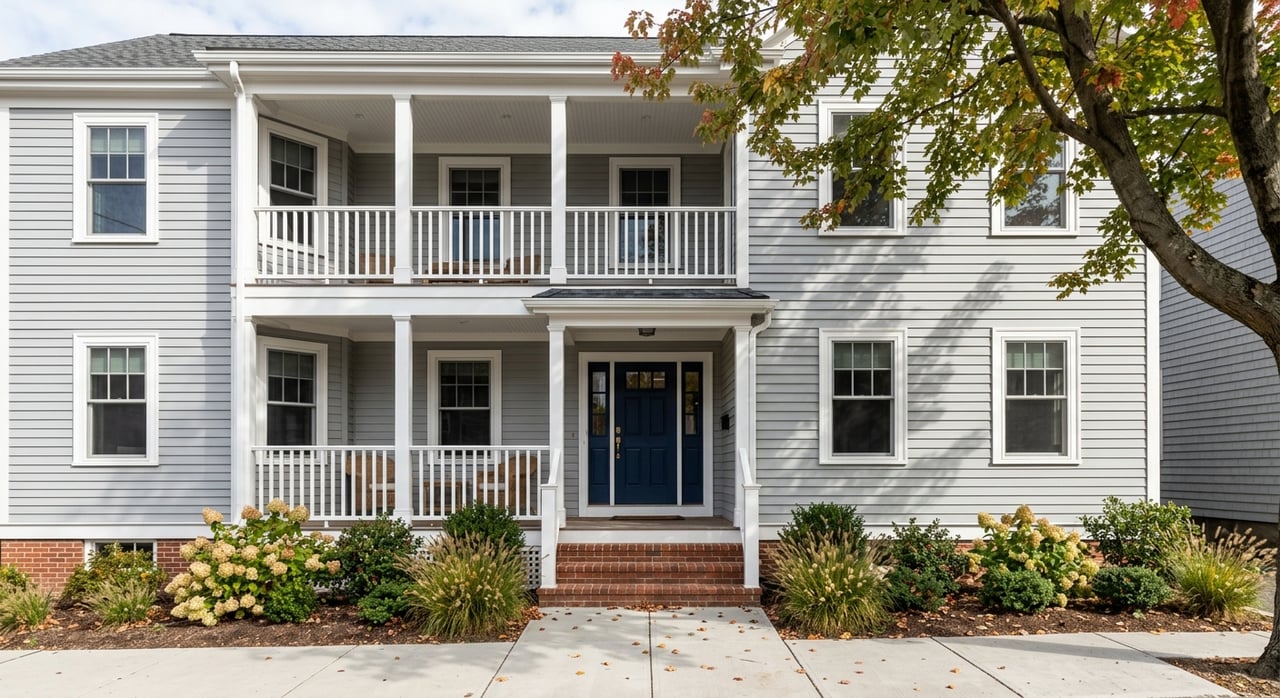
That mix suggests you will often find the kind of small multifamily inventory common across Greater Boston. In Everett, that usually means older two-families, triple-deckers, and similar legacy buildings rather than large amounts of newer garden-style apartment product.
Age is a major part of the story. The same housing plan says 64% of Everett’s housing units were built before 1939. For investors, that can mean more charm and layout flexibility, but it can also mean higher heating and energy costs, more maintenance, and possible code-compliance issues.
Everett by the numbers
The local numbers help explain why Everett gets investor attention. You may be able to buy below some of the priciest neighboring markets while still pursuing competitive rents.
| City | Average Home Value | Average Rent |
|---|---|---|
| Everett | $643,199 | $2,802 |
| Chelsea | $529,876 | $2,619 |
| Revere | $601,286 | $2,764 |
| Malden | $688,748 | $2,668 |
| Medford | $846,061 | $3,297 |
| Somerville | $914,966 | $3,322 |
| Cambridge | $1,041,988 | $3,584 |
The takeaway is not that Everett automatically cash flows better. It is that Everett may offer a more favorable rent-to-price relationship than the most expensive inner-ring cities. That can make the numbers easier to work with, but only if the building condition, unit layout, and compliance status support your pro forma.
How to think about cash flow
Everett works best for investors who stay disciplined on basis and expenses. A higher rent level alone will not protect you if you underestimate repairs, turnover costs, or capital needs in an older property.
When you evaluate a deal, focus on the full picture:
- Current in-place rents
- Market rent potential based on actual unit condition
- Heating and utility setup
- Deferred maintenance
- Vacancy assumptions
- Ongoing repairs and capital reserves
- Local compliance costs
This matters even more in Everett because older housing stock can carry hidden expense risk. The city and MAPC housing plan specifically notes that older structures may have higher heating and energy costs, higher maintenance costs, and possible code-compliance issues.
A property that looks workable on a simple mortgage-versus-rent comparison can become much tighter once you account for systems, insulation, exterior work, and turnover items. In this market, careful underwriting is not optional. It is the difference between a stable hold and a frustrating one.
Due diligence matters more here
In Everett, local rules should be part of your underwriting from day one. The city’s Inspectional Services Department oversees safe construction, occupancy, habitability, and zoning enforcement.
One of the most important local items for rental owners is the Certificate of Habitability ordinance. According to the city’s Habitability FAQ, this applies to all rental property owners, including apartment complexes and rooming or lodging housing. The fee is $25 per apartment, and a new certificate is required each time a new tenant moves in.
That is a practical issue, not just a paperwork issue. If you are buying a small multifamily with tenant turnover ahead, you should understand how certificate requirements fit into your leasing timeline and operating costs.
Watch vacant property rules
Vacancy can change your numbers fast, especially if you plan to renovate before leasing. Everett has a separate vacant and foreclosed property registration process, which is especially relevant for distressed acquisitions or buildings that may sit empty during rehab.
The city states that registration must be renewed by November 15 each year. Fees are $500, $1,000, $2,000, or $3,000 depending on how long the property has been vacant.
For an investor, this means you should ask direct questions before closing:
- Has the property been vacant?
- Is it currently registered if required?
- Will your renovation schedule trigger added costs?
- Are there open issues tied to occupancy or condition?
These are the kinds of details that can quietly affect your total project budget.
Lead law can shape your plan
Lead compliance is another major issue in Everett because so much of the housing stock predates 1978. Massachusetts law requires lead-risk notification for homes built before 1978 that are being sold or rented.
Mass.gov also states that lead hazards must be removed or covered in homes built before 1978 where children under age 6 live. For small multifamily investors, this has real underwriting implications because it can affect repair scope, timing, and leasing considerations.
If you are evaluating an older two-family or 3-family, lead questions should be part of your standard review. You want clarity on documentation, known hazards, and the likely cost of addressing issues if needed.
Key Everett questions to ask
Before you buy an Everett small multifamily property, make sure you can answer a few practical questions with confidence.
Can the building support the numbers?
Look beyond asking price and projected rent. Review the actual condition of units, systems, common areas, and major components so you are not relying on optimistic assumptions.
Is the unit count clear?
For small multifamily investing, legal and practical unit status matters. You want to confirm the property’s setup, occupancy history, and any habitability or certificate issues that could affect your ability to lease smoothly.
What compliance items need attention?
In Everett, habitability requirements, vacancy registration issues, and lead-law obligations can all affect timing and cost. These are not side notes. They are part of the investment case.
Are your reserves realistic?
Because much of Everett’s stock is older, reserves matter. A deal that only works if nothing breaks is usually not a strong deal.
Everett’s real investment case
Everett is most compelling when you view it clearly. It offers a lower price point than Medford, Somerville, and Cambridge on average, while still showing stronger rent support than some lower-priced nearby cities.
That does not make every Everett multifamily a winner. The real case for buying here depends on basis, property condition, compliance status, and your ability to manage older-building expenses with discipline.
For the right buyer, that can be a very workable formula. If you want an inner-ring multifamily investment and you are willing to underwrite conservatively, Everett may deserve a place on your shortlist.
If you are comparing 2-to-4-unit opportunities across Everett and nearby inner-ring markets, the right guidance can save you time and help you avoid expensive surprises. The Marjie and Phil Team can help you evaluate local inventory, pressure-test deal assumptions, and navigate the details with a neighborhood-first, data-driven approach.
FAQs
What makes Everett attractive for small multifamily investing?
- Everett offers a renter-majority market, average rent of $2,802, and an average home value of $643,199, which places it below pricier nearby cities like Medford, Somerville, and Cambridge while still offering meaningful rent support.
What types of small multifamily properties are common in Everett?
- Everett’s housing mix includes many two-family and 3-to-4-unit buildings. A city and MAPC housing plan found 37.7% of housing units in two-family buildings and 23.1% in 3-to-4-unit structures.
What should investors know about older Everett buildings?
- Older Everett properties may come with higher heating and energy costs, more maintenance, and possible code-compliance issues. The city and MAPC housing plan notes that 64% of housing units were built before 1939.
What is Everett’s Certificate of Habitability requirement for rentals?
- Everett’s Habitability FAQ says the Certificate of Habitability ordinance applies to all rental property owners, the fee is $25 per apartment, and a new certificate is required each time a new tenant moves in.
What are Everett’s vacant property registration fees?
- Everett requires renewal of vacant and foreclosed property registration by November 15 each year, with fees of $500, $1,000, $2,000, or $3,000 depending on how long the property has been vacant.
What lead law issues matter for Everett multifamily buyers?
- Massachusetts law requires lead-risk notification for homes built before 1978 that are being sold or rented, and lead hazards must be removed or covered in pre-1978 homes where children under 6 live.